How to Build High-Converting Landing Pages with Landingi
The Cloud Collective
March 9, 2026
Can Landingi's in‑builder AI make multilingual landing campaigns painless?
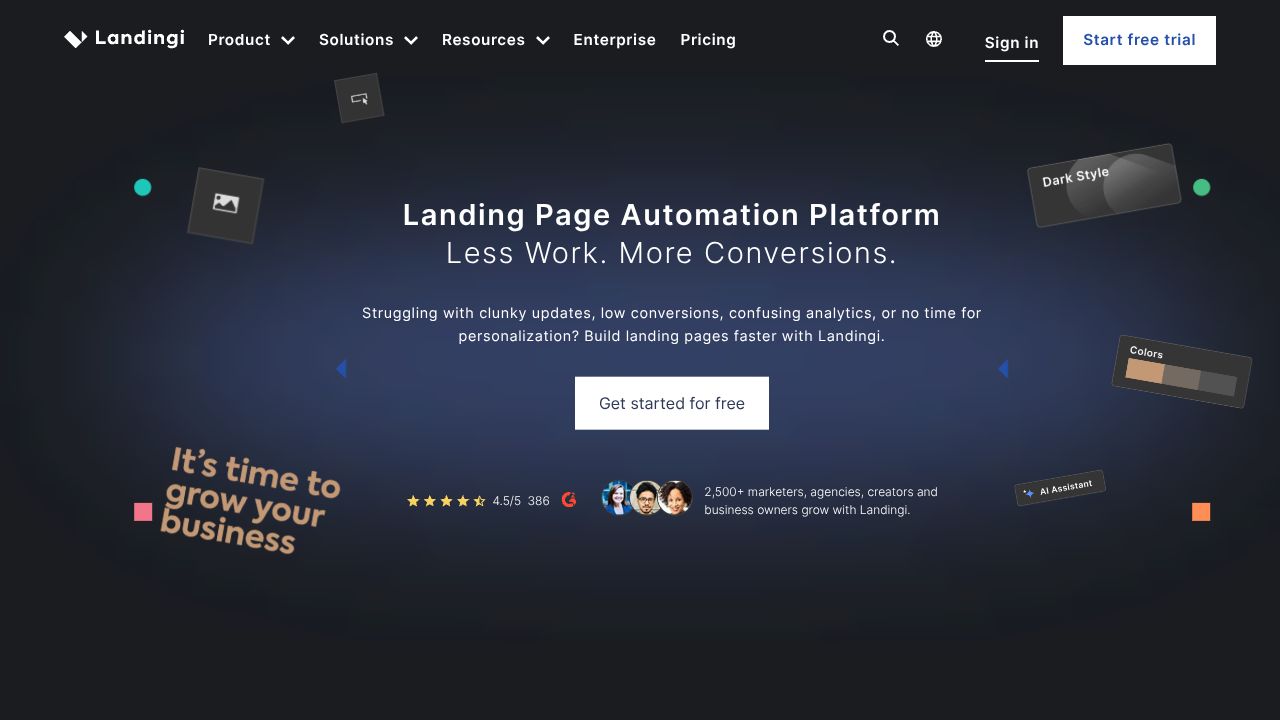
Ever spent hours tweaking headlines, meta tags and copy variants for an international campaign? We asked the same question when evaluating Landingi. At its core, Landingi is a template-driven landing-page platform with an in‑builder AI assistant that generates copy, recommends SEO elements and performs structural suggestions directly inside the editor. It layers machine translation (35+ languages) and A/B testing on top of a large template library, positioning itself for budget-conscious startups and international marketers who need quick, localized pages without hand-coding. From our team discussions and community feedback, the differentiator is that AI lives inside the builder—shortening the authoring loop between ideation, localization and deployment.
Architecture & Design Principles
Landingi follows a client‑heavy, modular SaaS design: a single‑page application editor in the browser (drag‑and‑drop canvas, WYSIWYG controls) communicating with backend APIs that manage templates, assets, versions, experiments and translations. The in‑builder AI functions as a microservice layer: edit actions invoke API calls to an AI/content service which returns copy blocks, SEO metadata or translated strings that are applied inline. Templates are componentized—sections, forms and scripts are stored as JSON blueprints—so the platform can instantiate localized variants and create A/B variants deterministically. For scalability the platform likely separates concerns (auth, content, analytics) into horizontally scalable services with a CDN for static assets and an edge layer to route traffic for experiments and geo/localized content delivery.
Feature Breakdown
Core Capabilities
- AI content generation with tone/length adjustment: The in‑builder assistant exposes tone and length controls that map to prompt parameters sent to a text-generation model. Practically, this means you can generate headline variants and immediately paste them into the DOM. Use case: create three tone variants for a hero headline and iterate with live previews.
- Auto‑translation to 35+ languages: Landingi automates content localization by producing translated copies and creating localized page variants (URL paths or subfolders). Technically this is a machine‑translation pipeline integrated with the page model and asset manager. Use case: spin up country-specific landing pages with translated CTA text and meta descriptions in minutes.
- A/B testing & SEO tools: The platform orchestrates split traffic routing at the server/edge level and aggregates conversion events for statistical comparison. SEO tooling inserts meta tags, canonical links and basic schema markup from the editor. Use case: test two pricing layouts and measure revenue-per-visitor while ensuring correct meta tags for each variant.
Integration Ecosystem
Landingi exposes APIs and webhook events to integrate with CRMs, analytics and marketing automation platforms. From our review and community notes, typical integrations include Zapier-style connectors plus native ties to email platforms and CRMs for lead forwarding. Webhooks emit events for form submissions, page publishes and conversion events, enabling real‑time syncs with data warehouses or CDPs. The architecture supports both synchronous API calls for on‑publish checks and asynchronous webhooks for downstream processing.
Security & Compliance
Landingi treats data per standard SaaS practices: encrypted transport (TLS), tenant isolation for accounts, and exportable lead data. Because the platform targets international marketers, it includes features like localized cookie consent and GDPR‑aware lead handling. For customers requiring formal certifications (ISO, SOC) or advanced controls (SCIM/SSO, audit logs), we recommend confirming availability per plan—enterprise tiers commonly expose these features.
Performance Considerations
Performance centers on the editor UX and published page speed. The in‑browser canvas must minimize reflows and network roundtrips; Landingi achieves this with client‑side rendering and batching of save operations. Published pages rely on a CDN for assets and edge routing for A/B splits; however, heavy use of AI-generated microcopy or multiple third‑party scripts (analytics pixels, chat widgets) can add latency. Monitor Core Web Vitals on a per‑template basis and optimize image delivery and script loading where campaigns are performance-critical.
How It Compares Technically
Technically, Landingi’s unique selling point is the embedded AI + translation pipeline inside the editor. Competitors focus differently: Unbounce emphasizes conversion tooling and dynamic text replacement (https://unbounce.com), Instapage targets enterprise collaboration and personalization (https://instapage.com), while Leadpages skews toward simple funnels and low-cost entry (https://www.leadpages.com). If your priority is in-editor AI-driven localization, Landingi simplifies the loop; if you need advanced personalization at scale or enterprise analytics, evaluate platform feature parity against these alternatives.
Developer Experience
Documentation and API surface area are pragmatic: RESTful endpoints for pages, forms and leads, plus webhook configuration. Our team found the docs adequate for common automations (lead forwarding, publish hooks), though power users likely want SDKs and example repos for complex workflows. Community forums and support channels are active for onboarding and template troubleshooting, which speeds integration for small engineering teams.
Technical Verdict
Strengths: a streamlined authoring flow that couples AI copy generation, translation and A/B testing—ideal for fast international campaigns on a budget. Limitations: fewer enterprise-grade guarantees out of the box compared to platforms built for large teams; performance can vary by template and third‑party scripts. Ideal use cases: startups and marketing teams that need rapid, localized landing pages and copy experimentation without heavy engineering lift. Our team recommends piloting a multilingual campaign to validate translation quality and experiment telemetry before scaling.
Ready to Explore Landingi?
Visit the official site and see if it fits your cloud stack.
Visit Website→